
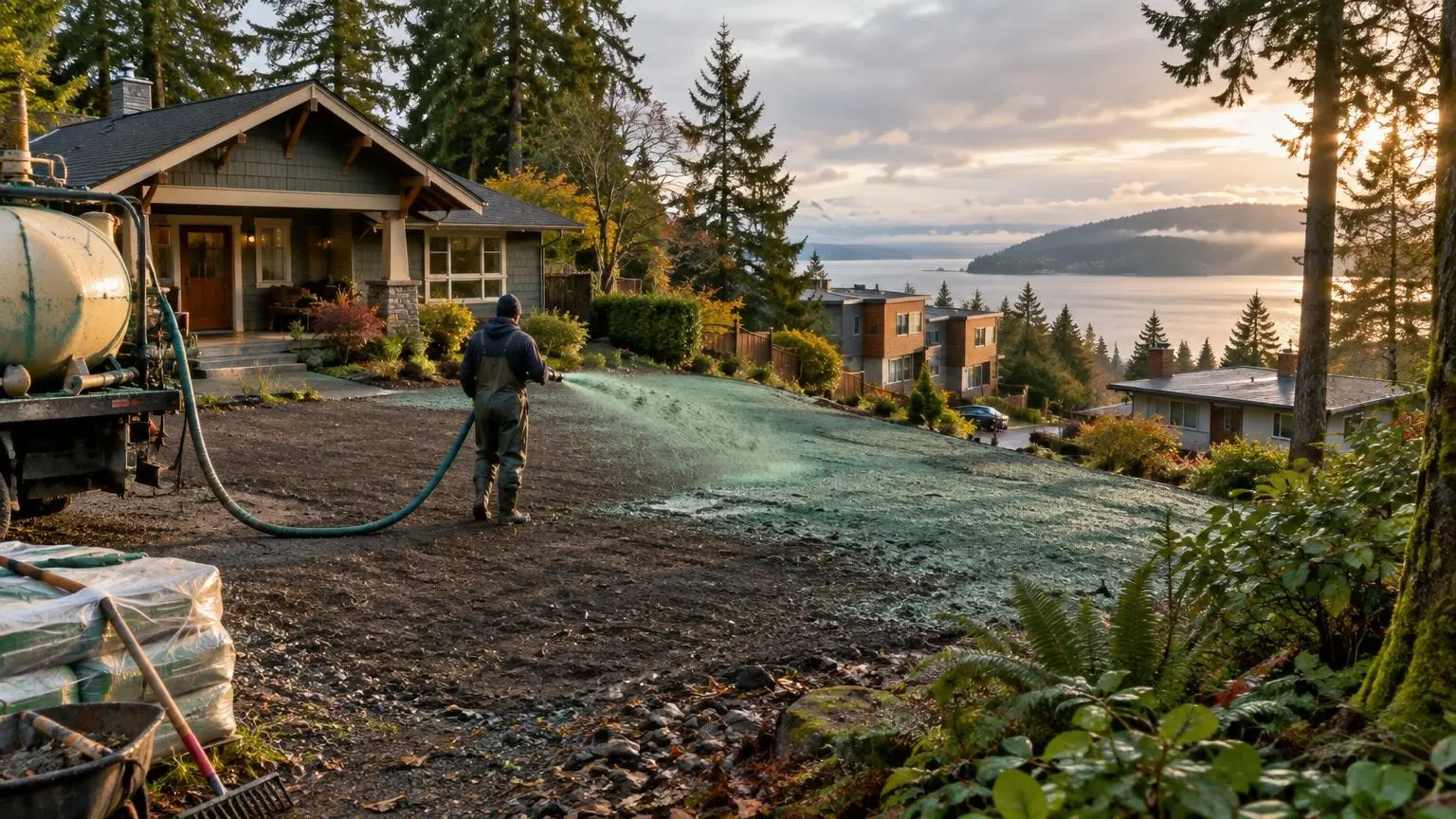
Keep the mud on your side of the curb
Silt Fence & Inlet Protection in Seattle, WA
Sediment controls installed before the dirt moves and kept working until the ground is seeded.
- We walk your property first, then put the quote in writing at no charge
- Seeding dates planned around Seattle's dry summer and wet winter
- One crew for grading, seeding and sediment control
Sediment Control Before the First Shovel
Silt fence and inlet protection in Seattle should be the first things installed on a building or grading site and the last things to come out. When bare soil gets rained on, runoff carries fine sediment toward sidewalks, gutters and catch basins. Silt fence along the low edge slows that water and lets the soil settle out, and inlet protection keeps what gets past it out of the storm drain. As silt fence contractors, we install both, along with the other basic sediment control measures a residential or small commercial site needs.
Why it matters in this city
Water covers about 41 percent of Seattle's area, between Puget Sound, Lake Washington, Lake Union and the Ship Canal, and storm drains on many streets lead toward one of them. Most of the year's rain arrives between October and March, so a site that is bare in the fall is a site that will produce muddy runoff for months. The city's Stormwater Code and Manual exist to protect those receiving waters, and Volume 2 of the manual covers construction stormwater control. Projects under 5,000 square feet of land disturbance can use the city's standard construction stormwater control and soil management plan; larger ones need a custom plan sheet that often shows exactly where fence and inlet protection go.
Doing silt fence installation right
Silt fence only works when its bottom edge is buried so water cannot run underneath it, the posts are on the downhill side, and the line follows the contour rather than running straight down a slope. Ends are turned uphill so runoff does not simply flow around the last post. Where heavier loads are expected, we use stabilized, wire-backed fence. A fence that is just stapled to stakes on top of the ground will not catch much.
Inlet protection
Catch basins downhill of the work get protected with filter fabric, sandbag rings, gravel and mesh, or insert devices. Which one we use comes down to where the basin sits: a back yard, a curb gutter or a lane cars drive over. Inserts in a street have to drain fast enough not to flood the road in a downpour, so we choose the device for the location.
Upkeep and removal
Sediment control is not install-and-forget. After heavy rain, fence can bow, undercut or fill with silt, and inlet filters clog. We can check and repair controls on a schedule during your project, clean out built-up sediment, and remove everything once the site is seeded and the grass has taken hold. Pulling fence too early, before cover is established, is one of the most common ways a finished site still ends up shedding mud.
Fitting controls to small city lots
Most infill lots in Seattle have very little room between the excavation and the sidewalk. Silt fence still has to sit on the downhill side of the work with enough space for sediment to collect, so we lay it out with the builder before digging starts, leave gaps only where they are covered by other controls, and plan where equipment will cross. Where fence will not fit, compost socks or wattles on the hard surface can do the same job.
Stockpiles and exposed soil
A pile of excavated soil next to a foundation is one of the biggest sediment sources on a small site. We cover stockpiles with plastic or mulch, ring them with wattles, and keep them away from inlets and the street. Areas that will sit untouched for a while get hydromulch so they are not bare through the next storm.
Larger sites and state coverage
The City of Seattle notes that the Washington Department of Ecology's Construction Stormwater General Permit is required for projects disturbing one or more acres of land. On those sites, sediment controls are usually part of a detailed plan with regular inspections. We install and maintain fence, inlet protection and cover to the plan, and keep our work documented so your site inspector has what they need.
When fence is not the right tool
Silt fence is meant for sheet flow from small areas. It is not designed to hold back water in a ditch or channel, and placing it across concentrated flow usually ends with it blown out. In those spots we use check dams, rock or wattles in the channel, or route water around the disturbed area. Once the surrounding soil is covered with hydromulch or blankets, much less sediment reaches the perimeter in the first place, and that is the real goal.
Sediment that does get past the controls on a rainy day should be swept from the sidewalk and street, not hosed toward the nearest drain.
Typical sites
- Home additions and new single-family builds
- Townhome and backyard cottage projects on infill lots
- Side-sewer and utility trenching that crosses a slope
- Grading and landscape renovation jobs
- Commercial pads and parking lot expansions
Sediment Control Work We Install
Perimeter, inlet and cover measures for a typical building or grading site.
Standard silt fence
Trenched-in filter fabric on stakes along the low edges of disturbed ground.
Stabilized silt fence
Wire-backed or reinforced fence for heavier sediment loads and longer projects.
Catch basin protection
Fabric, sandbag, gravel-and-mesh or insert devices, chosen for each inlet.
Straw wattles
Fiber rolls along contours on slopes and at the base of stockpiles.
Maintenance visits
Inspection, repair and sediment removal after storms.
Removal after seeding
Controls pulled once vegetation has taken over, with trenches backfilled.
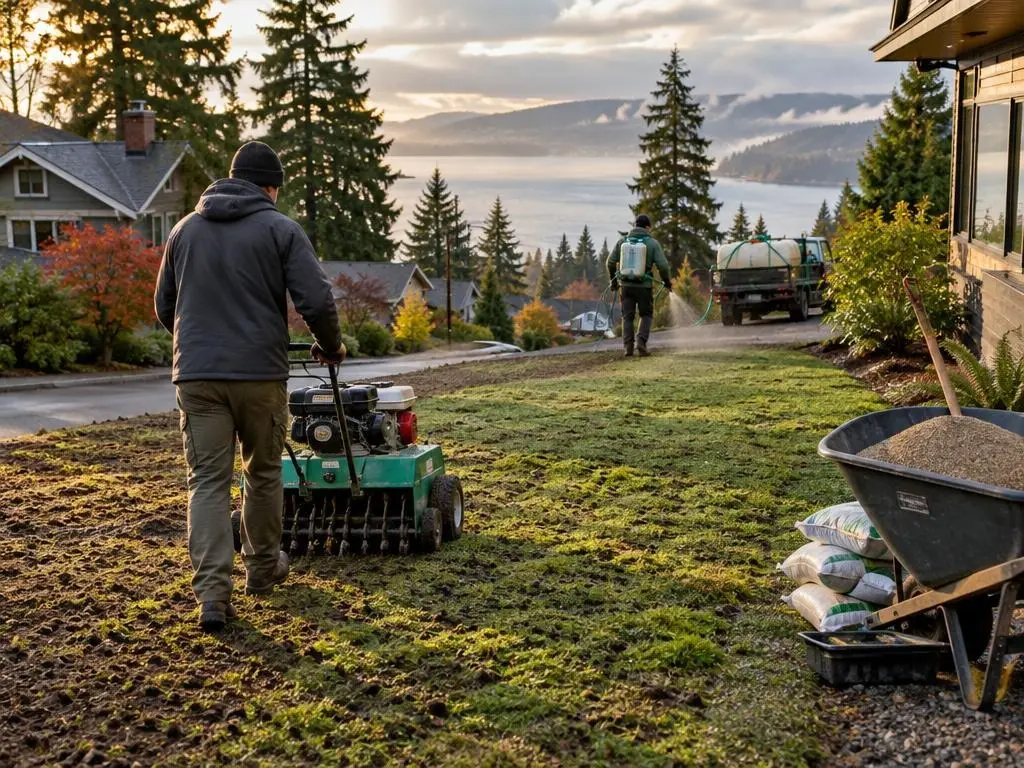
Silt Fence and Inlet Protection Rates
| Item | Published rate |
|---|---|
| Unreinforced silt fence, per 100 linear feet: state DOT unit costs (2025) | $378 |
| Stabilized (reinforced) silt fence, per 100 linear feet: same list | $748 |
| Silt fence ring at a drain inlet, each inlet: same list | $102 |
| Sandbag ring at a drain inlet, each inlet: same list | $141 |
| Inlet filter of gravel and wire mesh, each inlet: same list | $172 |
| Construction entrance and maintenance visits | Set once we see the site layout |
Agency unit rates for comparison, not our rate card; fence length, drain count, how long controls stay up and how often they need servicing decide the total. National guide figures; your price is whatever we put in writing after measuring.
Our Sediment Control Sequence
1. Read the plan
We follow the erosion control sheet if there is one, or lay out controls from the site's low points.
2. Install before grading
Fence trenched and staked and inlets protected before soil is disturbed.
3. Inspect after rain
On scheduled visits we fix undercut fence and clean clogged filters.
4. Seed the site
Hydroseed or mulch goes on as areas reach final grade.
5. Remove and restore
Controls come out after cover is established, and the trench line is raked and seeded.

Why Choose Us for Silt Fence & Inlet Protection
Trenched, not stapled
Fence goes into the ground so water cannot slip underneath.
Inlet devices fit for purpose
Street inlets get inserts that still drain in a downpour.
Seeding from the same crew
We stabilize the soil so the fence can come out sooner.
Silt Fence & Inlet Protection Questions
Does a small remodel need silt fence?
If bare soil can wash toward a sidewalk, street or catch basin, it is a sensible precaution, and permitted projects may require it on the plans. We can look at your site and suggest what makes sense.
How long does silt fence need to stay up on a Seattle job site?
Until the disturbed area is covered by grass or other stabilization. Removing it before then lets sediment escape in the next storm.
What is inlet protection?
A filter or barrier around or inside a storm drain that catches sediment before it enters the pipe. Types include fabric barriers, sandbags, gravel and mesh, and insert bags.
Do you maintain the controls during the project?
Yes, on an agreed schedule. Fence and filters need checking after heavy rain, which in Seattle means often from fall through spring.
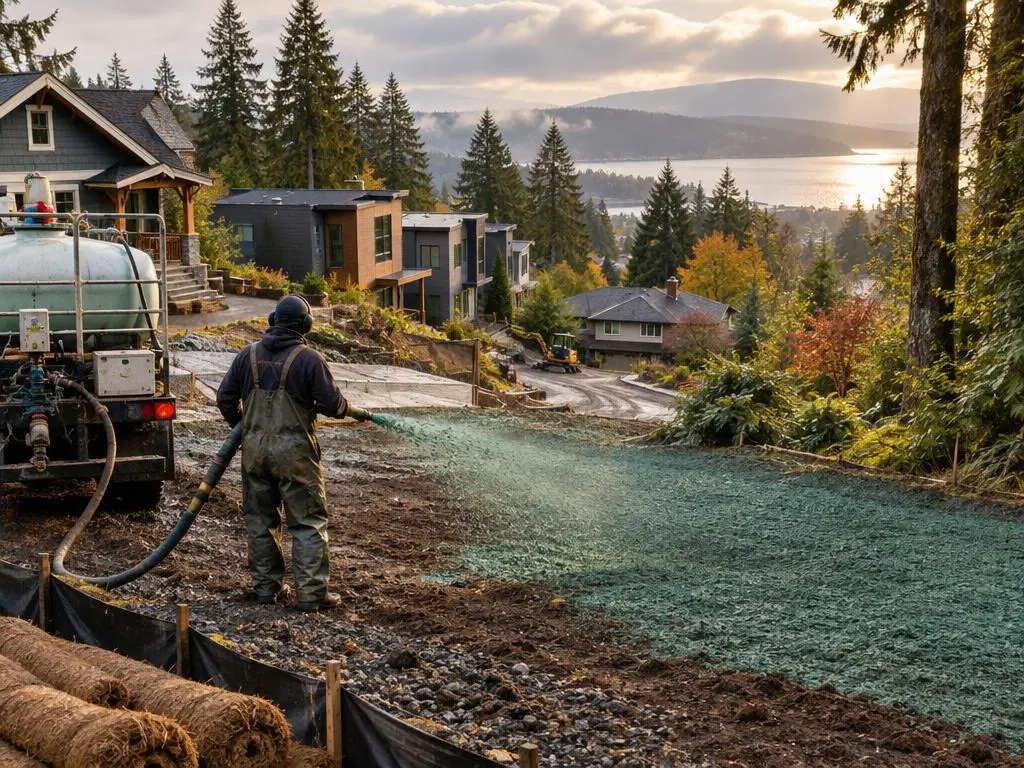
Silt Fence & Inlet Protection Service Areas
- Hydroseeding in Seattle, WA
- Hydroseeding in Bellevue, WA
- Hydroseeding in Redmond, WA
- Hydroseeding in Sammamish, WA
- Hydroseeding in Issaquah, WA
- Hydroseeding in Kirkland, WA
- Hydroseeding in Bothell, WA
- Hydroseeding in Kenmore, WA
- Hydroseeding in Renton, WA
- Hydroseeding in Kent, WA
- Hydroseeding in Auburn, WA
- Hydroseeding in Maple Valley, WA
- Hydroseeding in Covington, WA
- Hydroseeding in Federal Way, WA
- Hydroseeding in Puyallup, WA
- Hydroseeding in Bonney Lake, WA
- Hydroseeding in Snoqualmie, WA
- Hydroseeding in North Bend, WA
- Hydroseeding in Duvall, WA
- Hydroseeding in Enumclaw, WA
- Hydroseeding in Mill Creek, WA
- Hydroseeding in Lake Stevens, WA
- Hydroseeding in Marysville, WA
Get a Silt Fence & Inlet Protection Estimate
Free sediment control estimates for Seattle sites.