
Built on an ancient mudflow
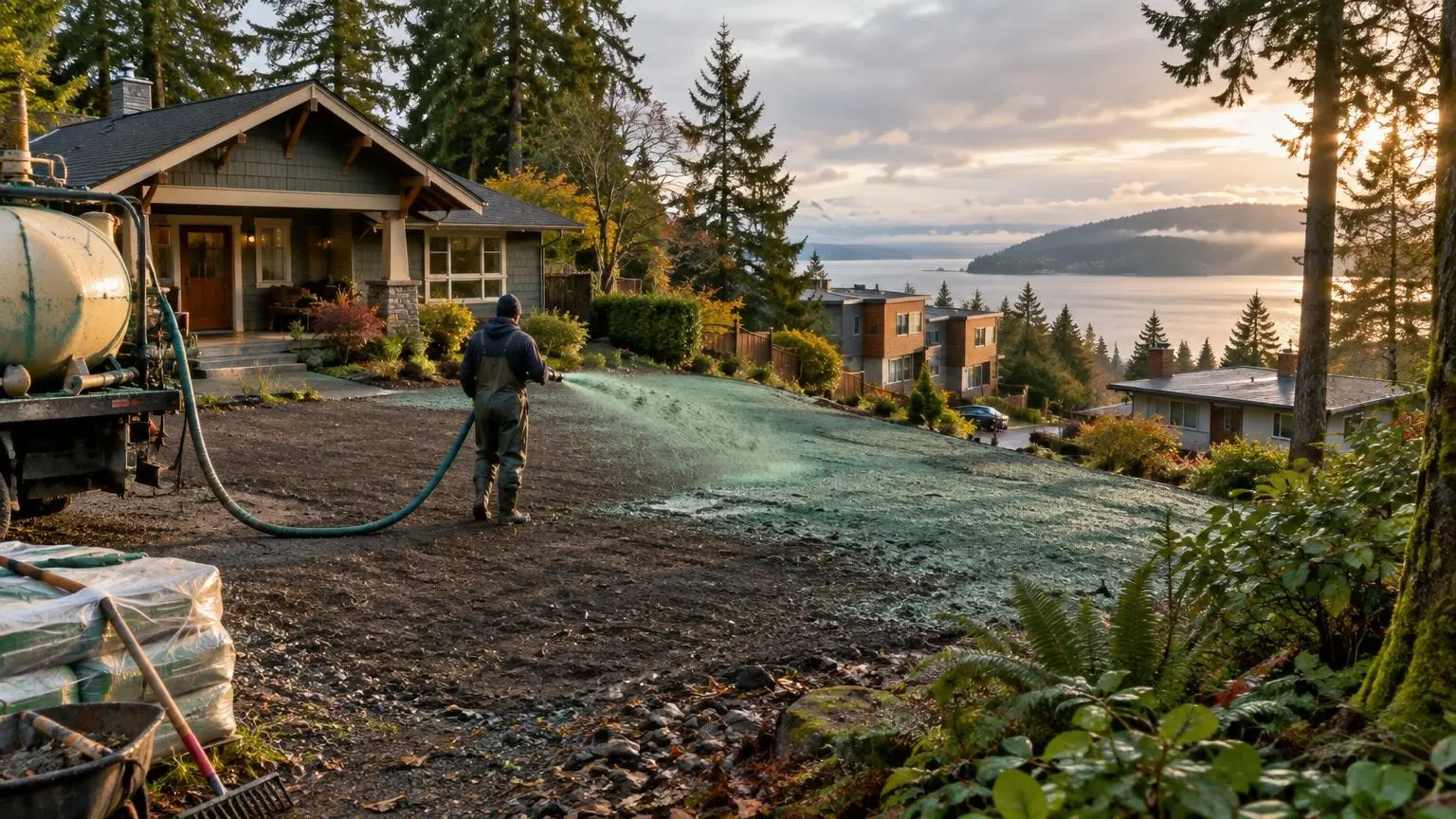
Hydroseeding in Puyallup, WA
The Puyallup Valley sits on Osceola Mudflow deposits from Mount Rainier, in farm country known for berries and daffodils.
- We walk your property first, then put the quote in writing at no charge
- Seeding dates planned around Seattle's dry summer and wet winter
- One crew for grading, seeding and sediment control
Grass in the Puyallup Valley
Hydroseeding in Puyallup happens on some of the most interesting ground in the region. The Puyallup Valley sits on deposits of the 5,600-year-old Osceola Mudflow from Mount Rainier, which laid down as much as 98 feet of material. The Puyallup River runs 45 miles from glaciers on Mount Rainier to Commencement Bay in Tacoma, and the valley is still an agricultural region producing berries and daffodils.
Valley soils
River valleys like this commonly carry alluvial soils. If a soil report for your property shows the USDA Puyallup series, that soil formed in recent alluvium on floodplains and low terraces, with 0 to 3 percent slopes and good drainage, and is used for hay, pasture and row crops. Ground like that usually seeds easily; our main job is fine grading and making sure construction compaction is broken up.
Mixed lots
Not every lot is river soil. Fill brought in during construction, gravel pads and old farm roads all show up on new home sites. We check the surface and add topsoil where needed rather than spraying seed onto hardpan.
Dry summers
Puyallup's summers are warm and dry with highs in the 70s most days, and most precipitation falls between October and March. Fall seeding takes advantage of returning rain; summer seeding needs a watering schedule.
Big event grounds and farms
The Washington State Fair draws over one million people a year. Fairgrounds, farms and other large open areas are good candidates for hydroseeding because coverage is fast and the cost per square foot is low compared with sod.
Common Puyallup projects
- New lawn installation on valley lots
- Pasture and field seeding
- Silt fence on builder sites near ditches
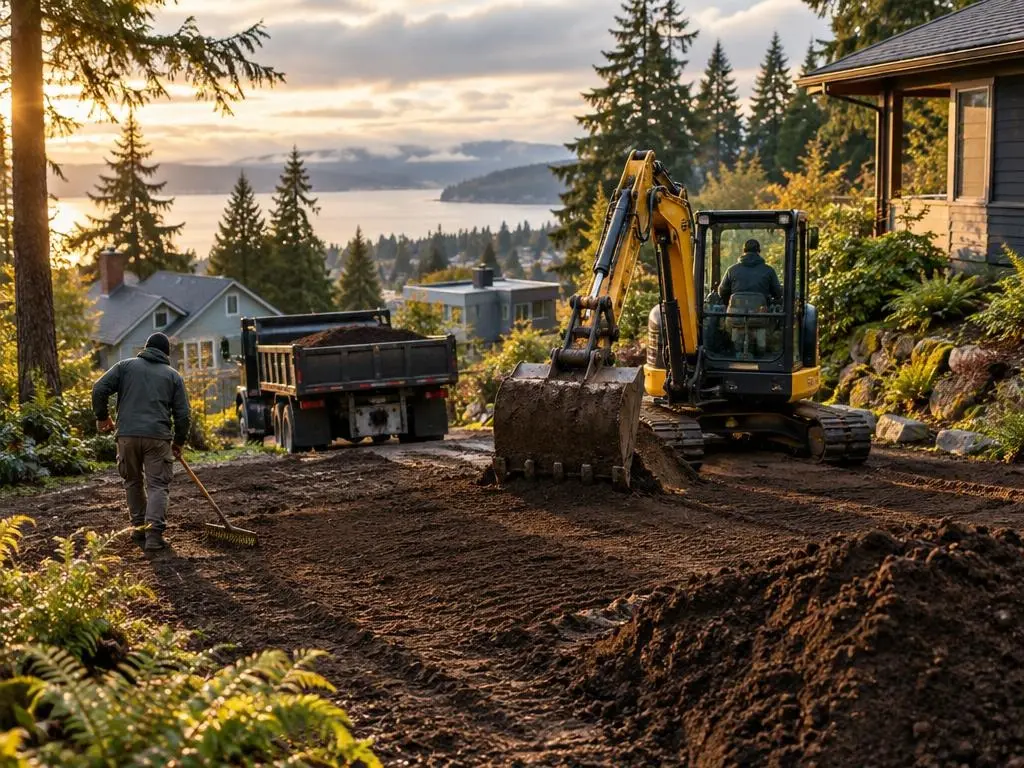
- Spreading topsoil and smoothing the final grade
For a price on yours, phone (206) 208-7934 or get a free estimate.
Puyallup Valley Ground
- Osceola Mudflow. The Puyallup Valley sits on deposits of the 5,600-year-old Osceola Mudflow, which laid down as much as 98 feet of material.
- Puyallup River. The river runs 45 miles from the Puyallup and Tahoma glaciers on Mount Rainier to Commencement Bay and drains 948 square miles.
- Farm valley. The valley is an agricultural region that produces berries and daffodils.
- Puyallup soil series. USDA describes Puyallup series soils as formed in recent alluvium on floodplains and low terraces, well drained, with 0 to 3 percent slopes.
Puyallup Questions
Is Puyallup valley soil good for a new lawn?
Valley alluvium usually grows grass well. The bigger issue is construction fill and compaction on top of it, which we fix before seeding.
Can you hydroseed pasture or a horse field?
Yes. Hydroseeding works well on large open areas, and we can use a pasture mix instead of a lawn blend.
When should I seed in Puyallup?
Early fall is usually easiest because rain returns. Spring is fine with irrigation through the dry summer.
Do you install silt fence along farm ditches during construction?
Yes. Ditches carry sediment fast, so silt fence and quick cover matter there.
Free Estimates in Puyallup, WA
Free estimates in the Puyallup Valley.
Hydroseeding Near Puyallup
- Hydroseeding in Seattle, WA
- Hydroseeding in Bellevue, WA
- Hydroseeding in Redmond, WA
- Hydroseeding in Sammamish, WA
- Hydroseeding in Issaquah, WA
- Hydroseeding in Kirkland, WA
- Hydroseeding in Bothell, WA
- Hydroseeding in Kenmore, WA
- Hydroseeding in Renton, WA
- Hydroseeding in Kent, WA
- Hydroseeding in Auburn, WA
- Hydroseeding in Maple Valley, WA
- Hydroseeding in Covington, WA
- Hydroseeding in Federal Way, WA
- Hydroseeding in Bonney Lake, WA
- Hydroseeding in Snoqualmie, WA
- Hydroseeding in North Bend, WA
- Hydroseeding in Duvall, WA
- Hydroseeding in Enumclaw, WA
- Hydroseeding in Mill Creek, WA
- Hydroseeding in Lake Stevens, WA
- Hydroseeding in Marysville, WA