
Snohomish County's biggest lake
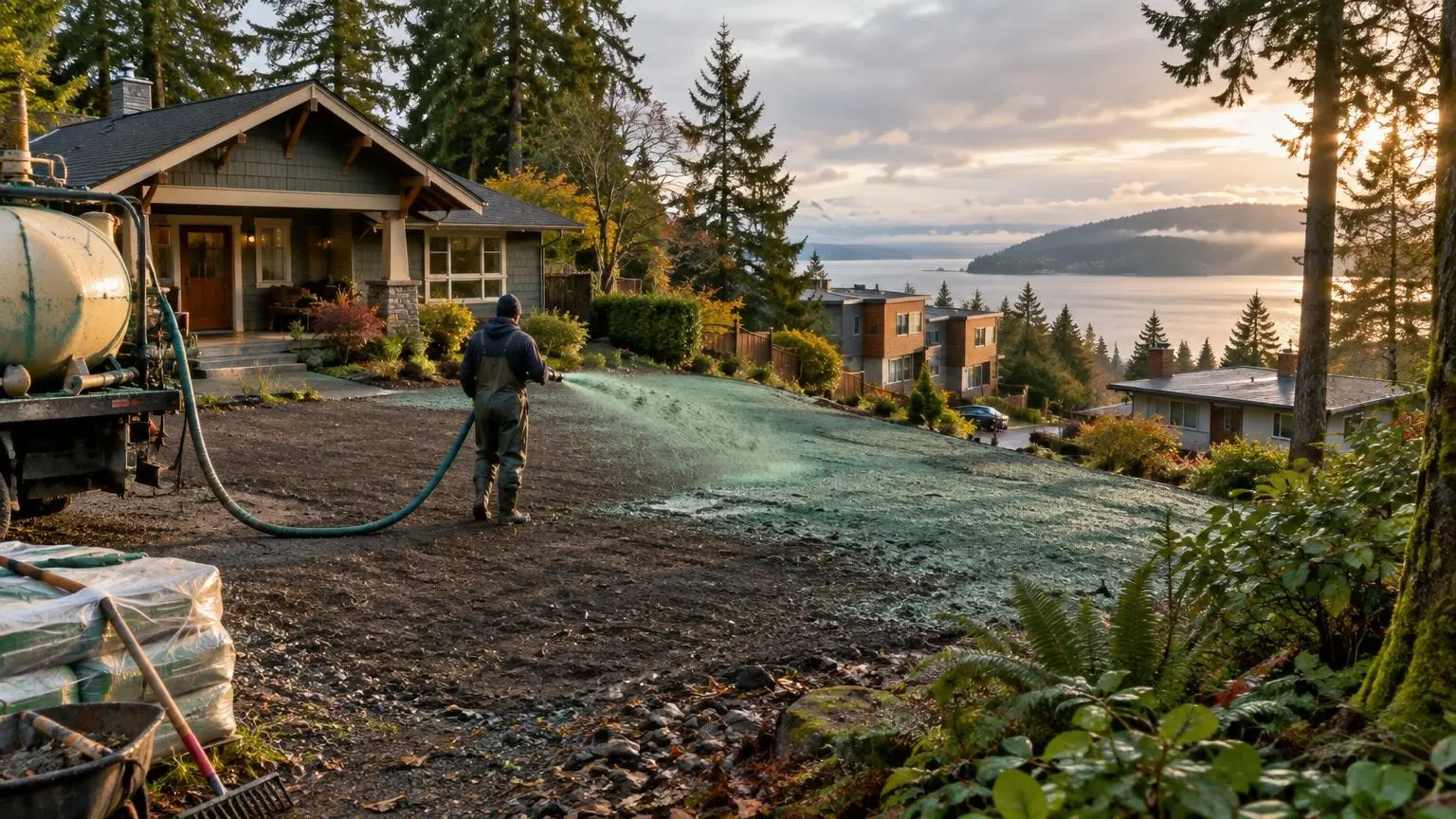
Hydroseeding in Lake Stevens, WA
A plateau city that grew fast, wrapped around a 1,040-acre lake with a sediment problem to watch.
- We walk your property first, then put the quote in writing at no charge
- Seeding dates planned around Seattle's dry summer and wet winter
- One crew for grading, seeding and sediment control
Lake Stevens Lawns and Runoff
Hydroseeding in Lake Stevens comes with a lake to think about. The lake covers 1,040 acres, averages 64 feet deep and is the largest and deepest in Snohomish County, with a watershed of about 4,371 acres. An aeration system was installed in the 1990s to control phosphorus released from lake sediments. Soil that washes off a yard ends up in that system, so good erosion control is part of every job here.
Keeping sediment on the lot
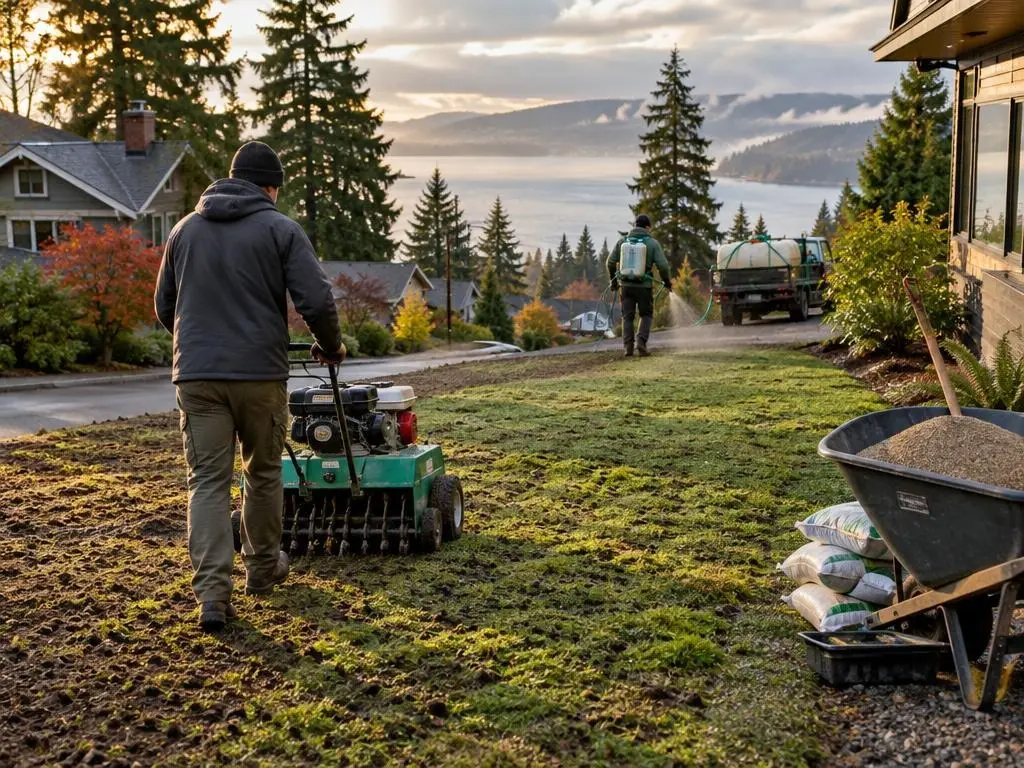
For homes in the lake's watershed, we install silt fence on the low side, protect nearby storm inlets and get hydromulch down quickly after grading. We also keep fertilizer rates sensible in the slurry so a heavy rain does not flush nutrients downhill.
A city that quadrupled
From 2000 to 2010 Lake Stevens' population quadrupled to nearly 30,000, and the largest annexation, 9 square miles in the southwest, was completed in December 2009 and added more than 10,000 residents. All those newer homes mean plenty of lawn installation, builder silt fence and final hydroseeding.
Plateau ground
The city lies on a plateau between the Snohomish River delta and the Cascade foothills. Upland lots tend to have firm glacial soils; we check for compaction from construction and spread topsoil where the builder left mostly subsoil.
Mill-town past
The Rucker Brothers' shingle mill, opened in 1907, was one of the largest in the country until a 1925 fire closed it for good. Older lots near the historic core can carry old fill or debris, which we clear before seeding.
Lake Stevens jobs
- Lake-watershed sediment control
- Lawns for newer annexed neighborhoods
- Topsoil and fine grading
- Builder hydroseeding
Get a free estimate or call (206) 208-7934.
Lake Stevens Facts
- The lake. Lake Stevens covers 1,040 acres with an average depth of 64 feet, the largest and deepest lake in Snohomish County.
- Phosphorus control. An aeration system was installed in the 1990s to control phosphorus released from the lake's sediments.
- Watershed. The lake's watershed covers about 4,371 acres, fed by Lundeen, Mitchell and Stitch creeks.
- 2009 annexation. The largest annexation, 9 square miles in the southwest, was completed in December 2009 and added more than 10,000 residents.
Lake Stevens Questions
Why do you put up silt fence for a lawn near the lake?
Sediment carries nutrients into the lake. Silt fence and fast cover keep soil on your lot until grass takes hold.
Do you limit fertilizer in the hydroseed mix near the lake?
We use moderate rates and avoid seeding right before heavy rain, which reduces runoff.
My new home in the annexed area has a dirt yard. Can you start from scratch?
Yes, from topsoil and grading through hydroseeding.
Do you seed builder lots on the plateau?
Yes, along with silt fence and inlet protection during construction.
Free Estimates in Lake Stevens, WA
Free estimates around Lake Stevens.
Hydroseeding Near Lake Stevens
- Hydroseeding in Seattle, WA
- Hydroseeding in Bellevue, WA
- Hydroseeding in Redmond, WA
- Hydroseeding in Sammamish, WA
- Hydroseeding in Issaquah, WA
- Hydroseeding in Kirkland, WA
- Hydroseeding in Bothell, WA
- Hydroseeding in Kenmore, WA
- Hydroseeding in Renton, WA
- Hydroseeding in Kent, WA
- Hydroseeding in Auburn, WA
- Hydroseeding in Maple Valley, WA
- Hydroseeding in Covington, WA
- Hydroseeding in Federal Way, WA
- Hydroseeding in Puyallup, WA
- Hydroseeding in Bonney Lake, WA
- Hydroseeding in Snoqualmie, WA
- Hydroseeding in North Bend, WA
- Hydroseeding in Duvall, WA
- Hydroseeding in Enumclaw, WA
- Hydroseeding in Mill Creek, WA
- Hydroseeding in Marysville, WA